


Engage in dialogues
How could museums be used as places of learning? Could museums become a regular part of school? Questions like these are especially pressing in Namibia, where many schools have to cope with overcrowded classrooms, often with more than 50 children in a room.
In the Namibian-German funded project “Alternative Classroom”, the Scientific Society Swakopmund and the Landesmuseum Hannover are now working on an innovative museum education programme. Together, they are developing teaching units tailored specifically to the Namibian context. The units are directly aligned with local curricula and turn a museum visit into a hands-on learning experience. During the pilot phase, which runs until the end of 2026, the findings will be put into practice and tested by teachers in Namibia. At the same time, the cross-cultural discussions on accessibility, provenance research, and creative approaches to museum education have also opened up new perspectives for the LandesmuseumHannover. Together, the two institutions are showing how museums can take on social responsibility, now and in the years ahead.
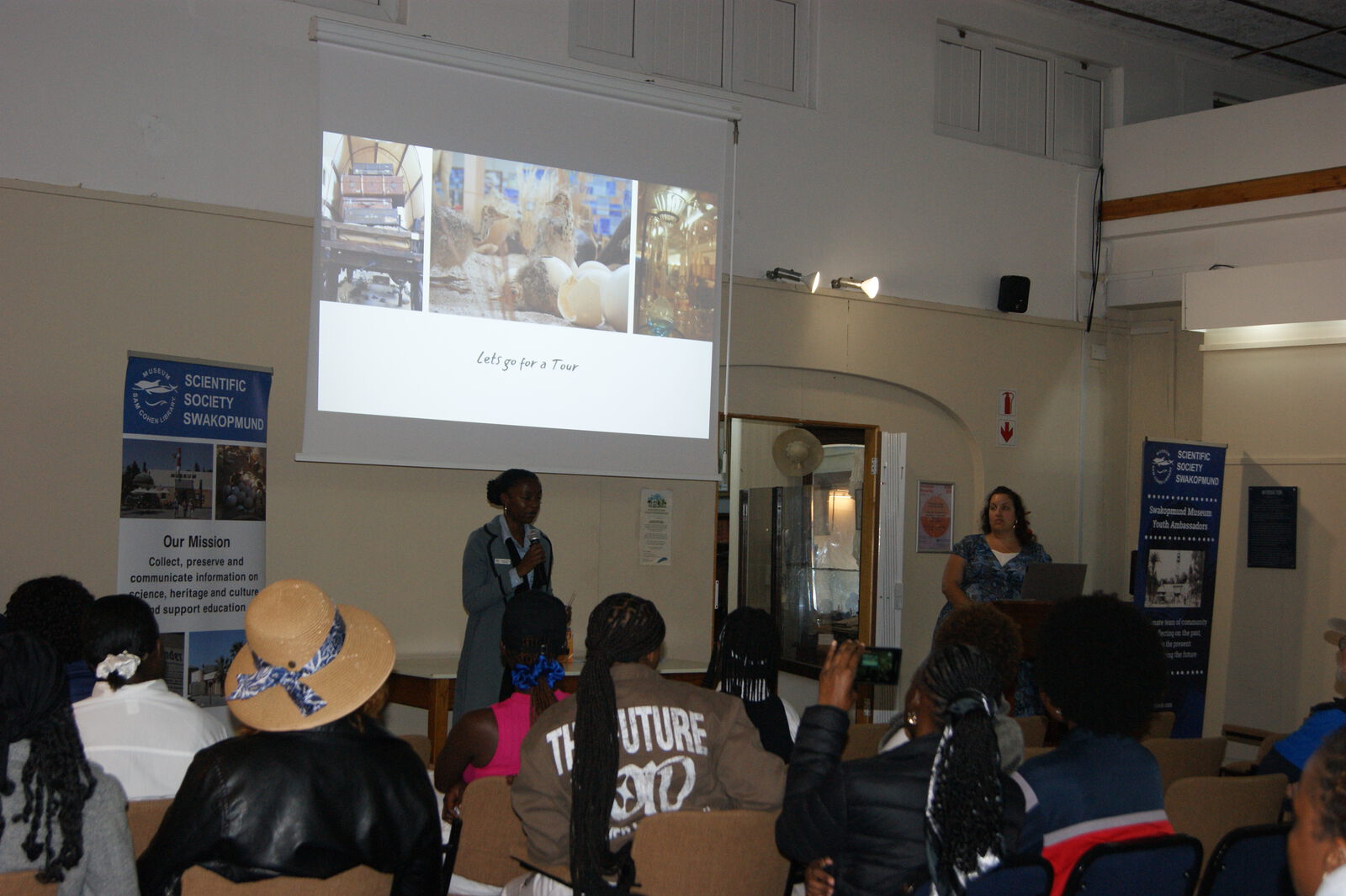
Scientific Society Swakopmund / Swakopmund Museum, Swakopmund, Namibia
Founded in 1951, Swakopmund Museum is Namibia’s largest privately run museum, with rich collections covering culture, nature, and regional history. Run by the Scientific Society Swakopmund, the museum sees itself as a vibrant centre of learning that fosters public dialogue and supports young people through initiatives such as the Museum Youth Ambassadors.
Lead institution in the “Engage in dialogues” funding programme
Landesmuseum Hannover, Hanover, Germany
As Lower Saxony’s largest state museum, the Landesmuseum Hannover brings together art, natural history, archaeology, and ethnology. The museum has many years of experience in museum education, inclusive learning, and provenance research. The museum is also internationally engaged and promotes transcultural knowledge exchange on equal terms.
Project partner in the “Engage in dialogues” funding programme
When a school class visited Swakopmund Museum in Namibia, it was usually a special occasion – a field trip outside the regular curriculum. Since 2026, the “Alternative Classroom”project has been working to fundamentally rethink this model by extending the classroom into the museum. Teachers will be able to hold lessons in the exhibition space, drawing on tried-and-tested materials aligned with official Namibian curricula.
This can help ease pressure on overcrowded classrooms, while offering pupils another benefit: instead of learning solely through traditional frontal classroom instruction, they encounterobjects directly. “The museum visit becomes an extension of classroom learning, engaging all the senses,” says Namibian curator Nadine Phiri.
As part of the project, Phiri and her project assistant Laina Mia Ndeuyepa travelled from Swakopmund to the Landesmuseum Hannover in spring 2026 for an intensive professional development programme. The exchange focused on accessible approaches to education, sensory learning methods, and modular, progressive educational concepts such as the “Museum in a Suitcase”.
Building on the groundwork laid in Hanover, new teaching materials and pilot lessons for around 100 pupils in Swakopmund are being developed throughout 2026. The results feed into workshops with local teachers and the regional education authority, with a view to embedding the model in the Erongo region’s education system for the long term.
This international exchange is also expanding professional networks. Namibian and German museum professionals are acting as cultural ambassadors, developing and inspiring new approaches in education, exhibition practice, and community work. Through the project, the Landesmuseum Hannover is expanding its own education programme in particular while also strengthening its international profile.
“At the regional level, the project highlighted challenges such as overcrowded classrooms and limited cultural representation. The participants called for broader representation of Namibian culture, greater use of technology and social media to reach younger audiences, and creative outreach tools such as the ‘Museum in a Suitcase’.”
Nadine Phiri and Laina Mia Ndeuyepa, Swakopmund Museum
“This partnership between Swakopmund Museum and the Landesmuseum Hannover is helping both institutions develop their education programmes further as we learn from each other’s insights and ideas. Our cooperation gives the Landesmuseum and Swakopmund Museum greater international visibility, to the benefit of both institutions.”
Katja Lembke and Swantje Wurl, Landesmuseum Hannover
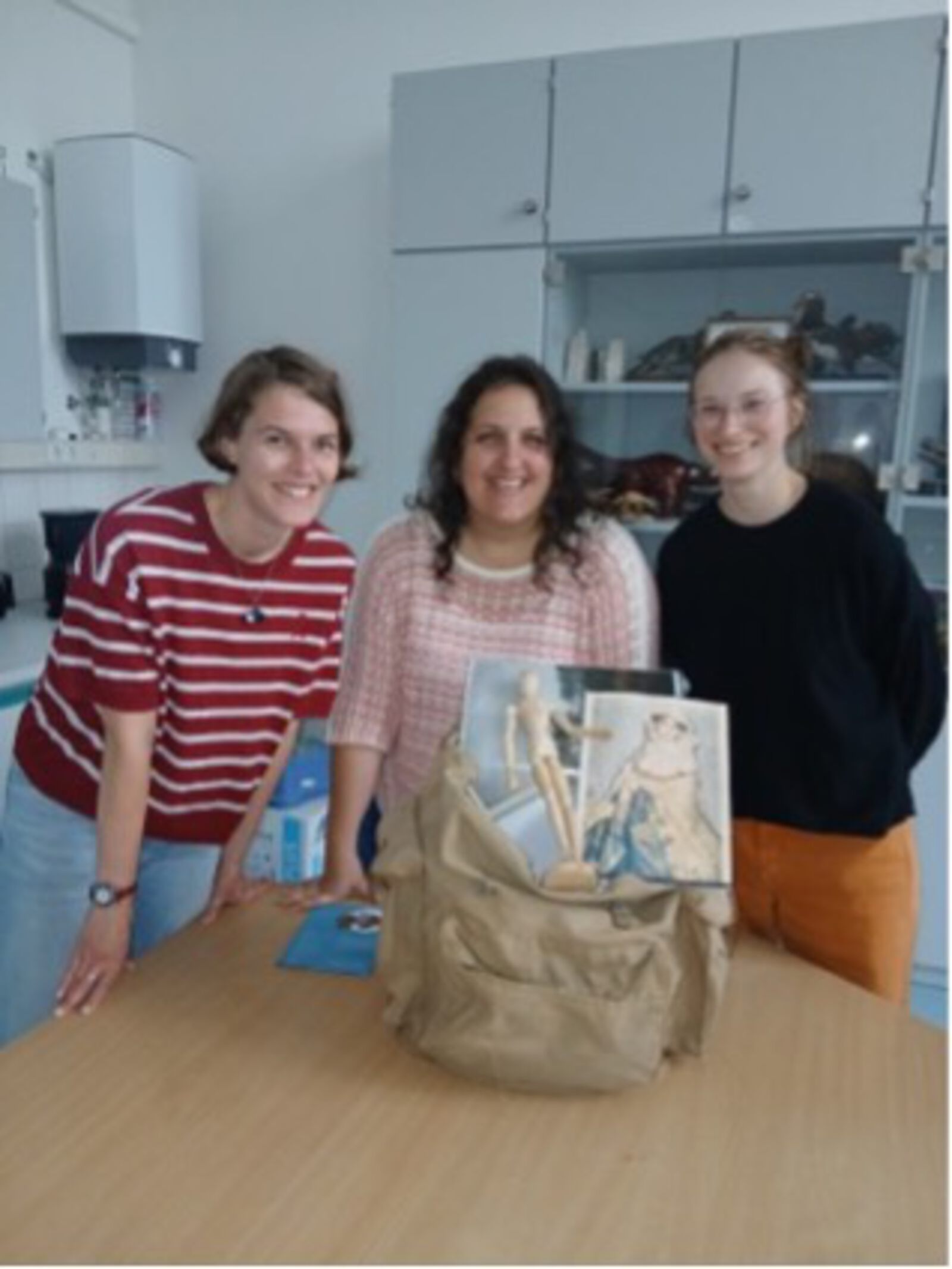
Professional exchange in Hanover: Marie Florentine Holte, Nadine Phiri, and Swantje Wurl with their “Museum in a School Bag”.
Nadine Phiri: “The ‘Alternative Classroom’ is an initiative designed to support teachers by reimagining the museum as an extension of the school. Rather than treating a museum visit as a day away from regular lessons and outside the curriculum, teachers will be able to teach directly in the museum, using tailored units aligned with Namibia’s national curriculum. That way, learning flows seamlessly between school and museum. At its core, we see the museum as a place for experiential learning. By moving the classroom into the museum, pupils gain access to hands-on, sensory learning that complements and enriches their regular schooling.”
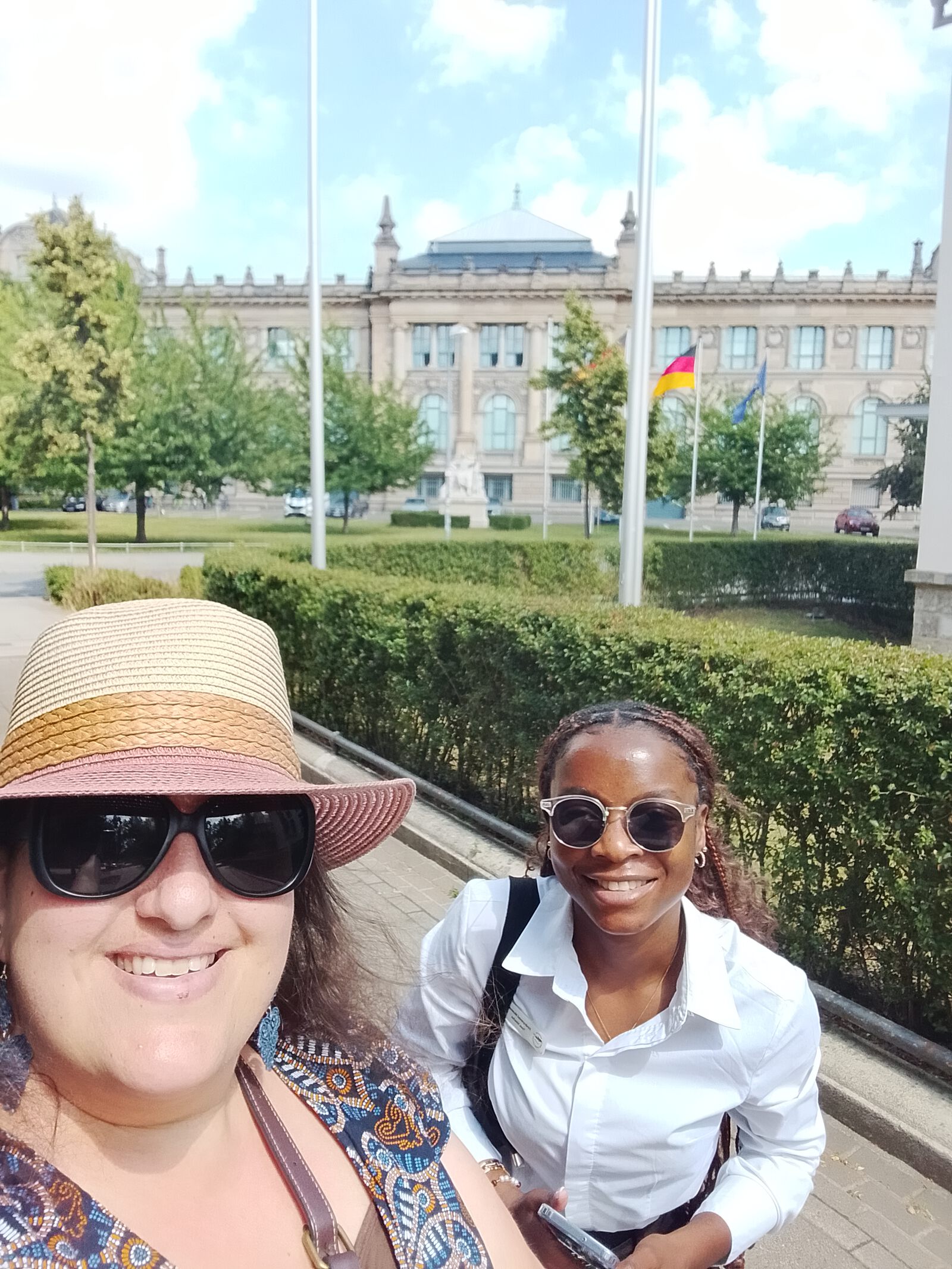
Nadine Phiri and Mia Ndeuyepa in front of the Landesmuseum Hannover.
Katja Lembke and Swantje Wurl: “This partnership between Swakopmund Museum and the Landesmuseum Hannover is helping both institutions develop their education programmes further, as we learn from each other’s insights and ideas. Our cooperation gives the Landesmuseum and Swakopmund Museum greater international visibility, to the benefit of both institutions.”
Photo: Pupils and teachers during a hands-on workshop at Swakopmund Museum.