


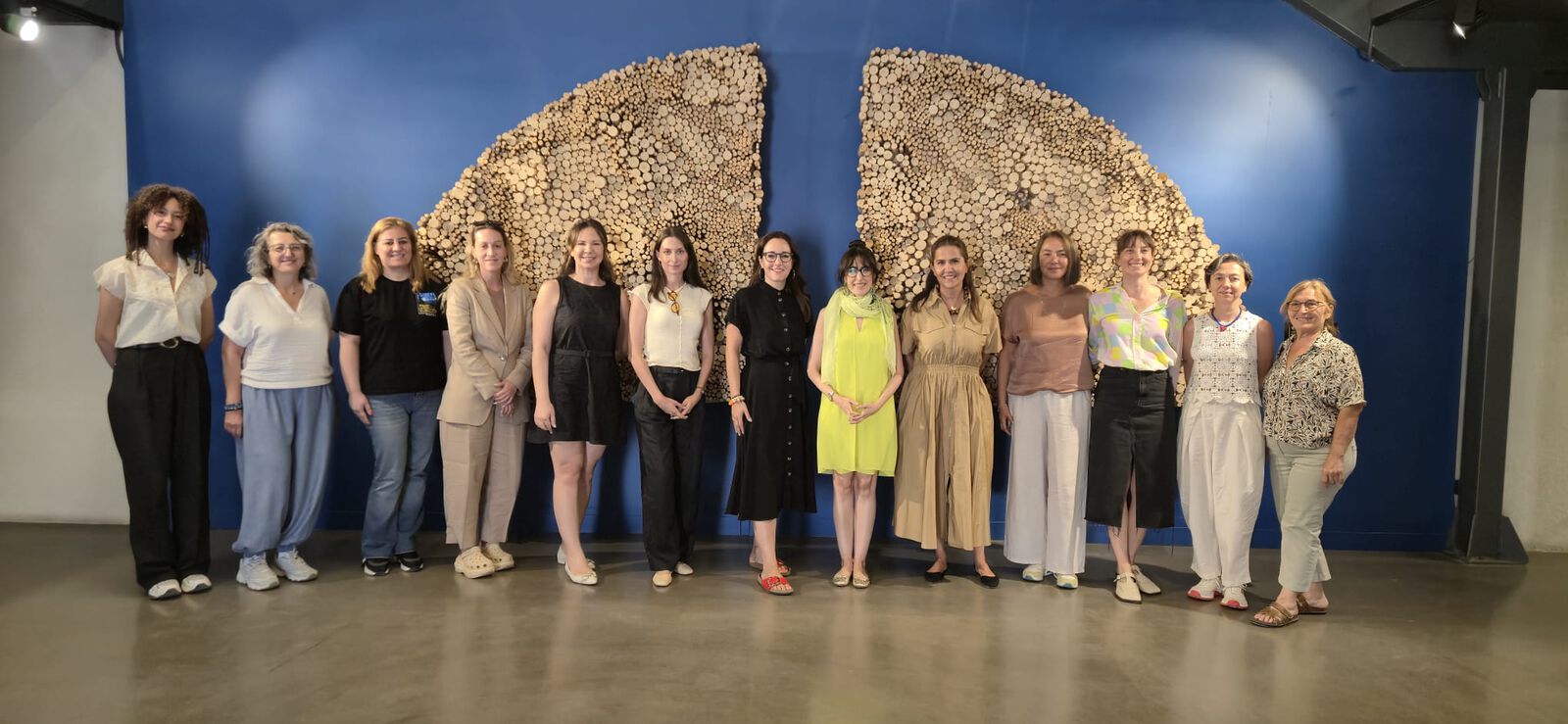
How can we tell stories that fall between the established narratives of art history in Türkiye and Germany? This is the question that TAM Museum in Berlin and the İzmir Resim ve Heykel Müzesi (İzmir Painting and Sculpture Museum) are currently exploring in their funded project “Contextualizing Women Artists: A Turkish-German Dialogue”. Taking women artists with connections to both countries as a starting point, the partners are developing new approaches to bring overlooked aspects of their histories to light.
By the end of 2026, the exchange between Berlin and İzmir will produce practical case studies and an inspiring toolkit for international museum practice. How can collections be recontextualised with regard to women artists? How can their biographies be researched more precisely, attributions examined, and exhibition narratives expanded? Through this close professional exchange, the partners are showing how museums can develop workable standards for writing a more inclusive cultural history that reflects multiple perspectives.
In November 2026, the partners will present their results at a public discussion event in Berlin, accompanied by a screening of a documentary film about the Turkish artist Mihri Hanım.
TAM Museum gGmbH, Berlin, Germany
Initiated in Berlin in 2024, TAM Museum is currently being developed and is set to become Germany’s first transcultural museum, focusing on German-Turkish heritage and the largely untold, intertwined histories of the two countries. TAM already brings together historical archives, oral history, and contemporary art to give unheard voices and marginalised biographies from a society shaped by migration greater visibility in the international museum landscape.
Project lead in the “Engage in dialogues” funding programme
İzmir Resim ve Heykel Müzesi (İzmir Painting and Sculpture Museum), Izmir, Türkiye
As a state museum within the İzmir Kültür Sanat Fabrikası, the İzmir Resim ve Heykel Müzesi preserves and presents significant holdings of painting, sculpture, and ceramics. It combines a long tradition of collection work with a strong local and regional commitment to presenting the visual arts.
Project partner in the “Engage in dialogues” funding programme
A familiar pattern emerges in recent art history: women artists who worked between Türkiye and Germany are largely absent from both countries’ art-historical canons. This is no coincidence; it reflects the collecting practices of institutions in both countries. The artists’ work spans different languages, is dispersed across different institutions, and is understood within different historiographical traditions. The “Contextualizing Women Artists” project aims to address these gaps by systematically researching and retelling the artists’ stories.
In August 2026, the TAM team from Berlin travelled to Izmir for an intensive working visit. A centrepiece of this exchange was the “Curatorial Dreaming” workshop, in which women artists, curators, and colleagues from Berlin and Izmir explored which narratives are missing from exhibitions. They also examined archives, private collections, and historical sites such as Ephesus, looking for new ways to interpret traces of women’s transcultural histories. This revealed the considerable curatorial potential of the collection in Izmir, as seen in the work of the painter Fahrelnissa Zeid.
Building on this work, the partners in Berlin and Izmir will develop four to six pilot case studies, a compact toolkit with examples, checklists, and workflows for research and public engagement, and a publicly accessible practice note by the end of 2026, drawing on dialogue labs and a peer review involving external experts. These resources are intended to inspire and encourage other institutions internationally. The project highlights one essential requirement for international museum cooperation: time. Discussing fundamental questions of ethics and responsibility is especially time-consuming. Moreover, access to international networks such as ICOM is unevenly distributed worldwide, which makes direct cooperation all the more valuable. In December, the partners will discuss continuing their collaboration on a long-term basis from 2027, with a view to a joint exhibition or publication project.
“TAM Museum in Berlin is being developed as a transcultural museum dedicated to the intertwined histories of Germany and Turkey. In this project, we stand for a simple idea: the stories that connect our two countries belong to both, and they can only be told together. Women artists who lived and worked between Turkey and Germany are a striking example, because they fall through the cracks of both national art histories.”
Müge Avar and Gülşah Stapel, TAM Museum Berlin
“International museum work creates opportunities to share knowledge, encounter different approaches, and see familiar subjects from new perspectives. It also takes time and care: language, institutional differences, available resources, and unequal access to platforms can all shape the exchange. The strongest collaborations make room for each partner’s perspective and give everyone a meaningful role.”
Ayşe Füruzan Caman and team, İzmir Resim ve Heykel Müzesi
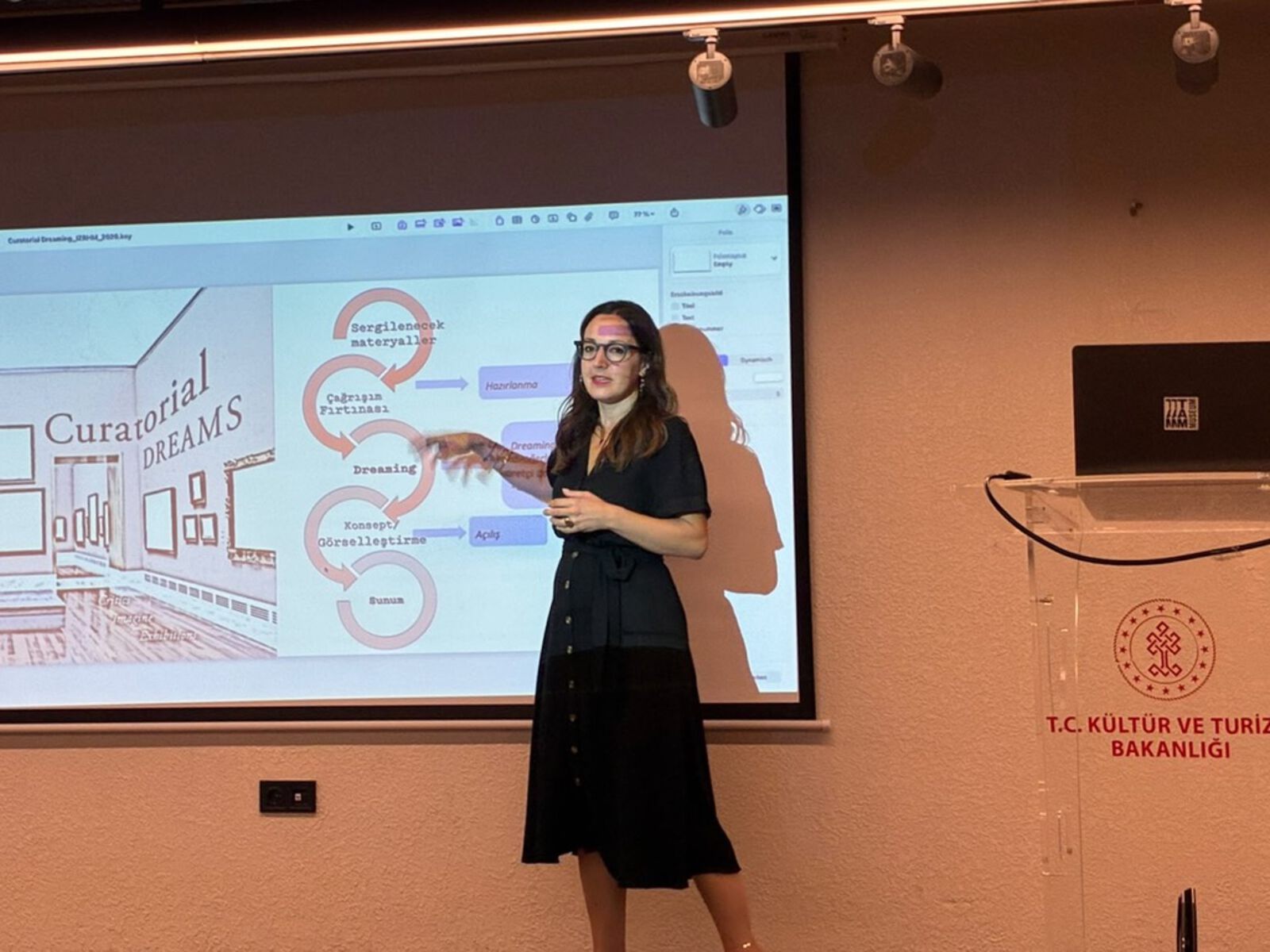
Gülşah Stapel at the “Curatorial Dreaming” workshop in Izmir.
Müge Avar and Gülşah Stapel: “A specific event that represents our project: The ‘Curatorial Dreaming’ workshop. Colleagues from both museums worked on the visibility of women artists and on the role of women in curatorial and museum practice. We used short presentations, group discussions, creative exercises, and visual mapping of ideas. Instead of starting from what our institutions can currently do, we started from the exhibition narratives we would want to tell. That created room for something that daily museum work rarely allows: negotiating what an exhibition is actually for.”
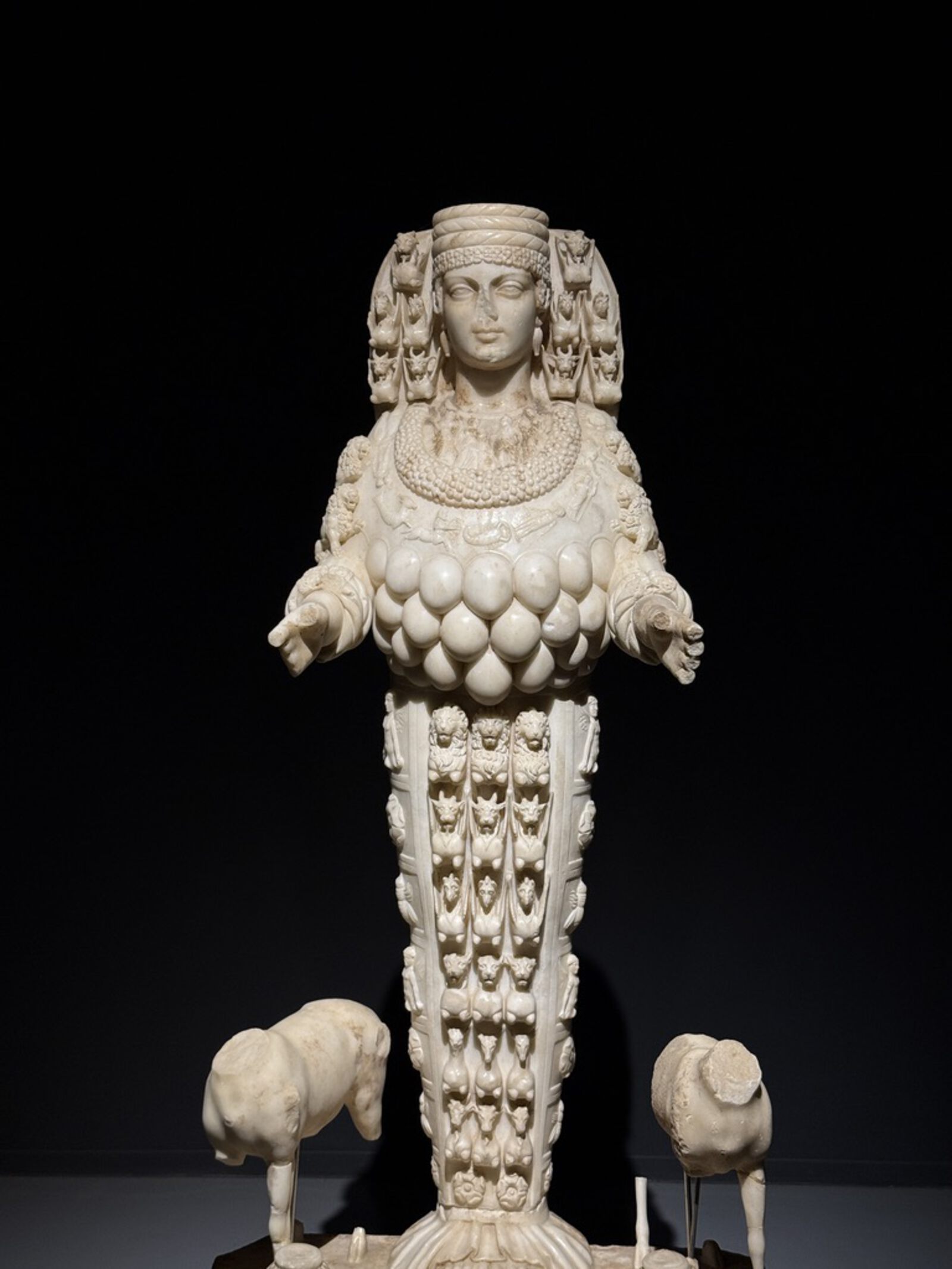
Ancient narratives of femininity in Ephesus, Türkiye.
Ayşe Füruzan Caman: “Our transcultural project is an effort to look at women artists and their works within the artistic, historical, and social contexts in which they were created. It can help us see not only the works themselves, but also the circumstances, networks, and histories that shaped them – and to consider whose stories have been included in or left out of art history.”
Some of the participants in the “Curatorial Dreaming” workshop at the İzmir Resim ve Heykel Müzesi, 2026.